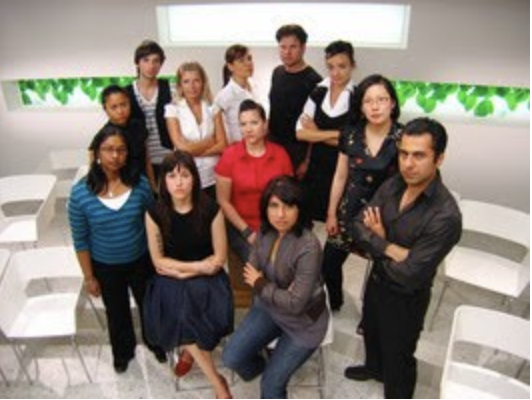
I don’t know if you know this about me, but I was on HGTV. Season 2 of Design Interns, to be exact. Why did I apply? Because I thought I could win, of course. The prize? A job with Cecconi Simone, one of Canada’s top interior design firms. At the time, I was working in retail, selling French furniture—so why not take a chance?
Spoiler alert: I didn’t win. But I made it to Week 4 out of 6, and what I learned about design, competition, and resilience during that time has stayed with me ever since.
The Reality of Reality TV Design
The premise of Design Interns was simple: contestants were divided into two teams and given real-world design challenges. If your team won, you celebrated. If your team lost, you had to create an individual design based on the assignment, and the judges would eliminate someone.
We worked on high-profile projects, including:
- Designing a condo for Concord
- Creating a restaurant for Massimo Capra
- Designing a La-Z-Boy chair
- Developing a retail store concept for Aldo
And my final solo challenge? A shoe carrier for Aldo.
What people don’t see is that behind the cameras, we were balancing the show with our full-time jobs. Filming ran Thursday through Sunday for six weeks straight, and the pressure was intense. But despite the competition, we built relationships—not just with our fellow designers, but also with the producers and crew. They wanted us to succeed because, let’s be honest, great design makes for great TV.
What I Learned About Design
Even though we were working at a manic pace, my approach to design didn’t change. Good design always starts with understanding the brief, doing research, generating ideas, and executing the best concept. The only difference? The timelines were brutally condensed.
Working with major brands like Aldo and La-Z-Boy meant we had to consider not just aesthetics, but also brand identity. It pushed me to think strategically—how do you design something that aligns with a company’s DNA while also standing out?
And sometimes, the reality of reality TV hit hard. There were moments when we just couldn’t get the materials or finishes we wanted. Paint and stain take time to dry, and we didn’t have that luxury. That’s when storytelling became critical. If you can’t perfect every detail, you need to sell the vision.
What I Learned About Competition
In a fast-paced, high-pressure environment, you have to know when to lead and when to support. Some challenges played to my strengths, while in others, it made more sense to step back and contribute in a way that best served the team.
Tension? Of course there was tension. But we kept it off-camera. We all knew that professionalism mattered, and no one wanted to be remembered for the wrong reasons.
And at the end of the day, the biggest advantage wasn’t just talent—it was persuasion. Storytelling is everything in design. The best designs aren’t just visually compelling; they tell a story that makes people see a space in a new way.
What I Learned About Resilience
Reality TV is all about compromise. You have to adapt, pivot, and decide—fast. What elements are non-negotiable in the design? What can be simplified without losing the impact? It’s a crash course in making smart, strategic decisions under pressure.
When I got eliminated, I was disappointed, but I left knowing that my final design reflected who I was as a designer. And while I didn’t walk away with the top prize, I did walk away with something valuable: a new level of confidence.
Bouncing back meant going right back to work. But something interesting started happening—I’d be at my retail job, and customers would recognize me from the show. They’d ask me design questions, tell me they were rooting for me, and say, “You should have won!” (Which, I mean, I agree.)
The experience reinforced something I’ve always believed: creativity thrives in collaboration. The best ideas don’t happen in isolation—they come from pushing each other, refining concepts, and working together to make something better.
Final Thoughts: The Art of Persuasion in Design
Looking back, Design Interns wasn’t just about designing under pressure. It was about learning how to pitch, how to adapt, and how to make an impact in a high-stakes environment.
Because at the end of the day, design is persuasion. Whether you’re selling an idea to a client, a judge, or a potential buyer, the way you tell the story behind your design is just as important as the design itself.
Would I do it again? Absolutely.
Would I win this time? You’ll just have to wait and see.
 Richelle Sibolboro
Leave a comment